
EVA, the Exceptional Voice App
| Role | Co-founder, Chief Creative Officer, Co-PI |
|---|---|
| Collaborators | Kathe S. Perez, MA, CCC-SLP Speech-Language Pathologist |
| Team | 6-person interdisciplinary team spanning Voice Science, Speech-language Pathology, Acoustical Engineering, Video Editing, Software Development, Business Mentorship |
| Funding | NIH SBIR Proposal |

A decade-long research and design project building accessible, evidence-based tools for voice feminization and masculinization training for transgender people. At its peak, the platform served 17,000 active users worldwide across mobile and web.
| Role | Co-founder, Chief Creative Officer, Co-PI |
|---|---|
| Collaborators | Kathe S. Perez, MA, CCC-SLP Speech-Language Pathologist |
| Team | 6-person interdisciplinary team spanning Voice Science, Speech-language Pathology, Acoustical Engineering, Video Editing, Software Development, Business Mentorship |
| Funding | NIH SBIR Proposal |
Eva F, Eva M, evaf.app
The EVA (short for Exceptional Voice App) development began as a design problem: could a structured, self-guided, visually mediated learning system provide effective voice training for transgender people who could not access or afford one-on-one speech therapy? As co-founder and Chief Creative Officer of VoxPop, LLC, I led user experience and product design for the resulting platform from its founding in 2013 through its dissolution a decade later.
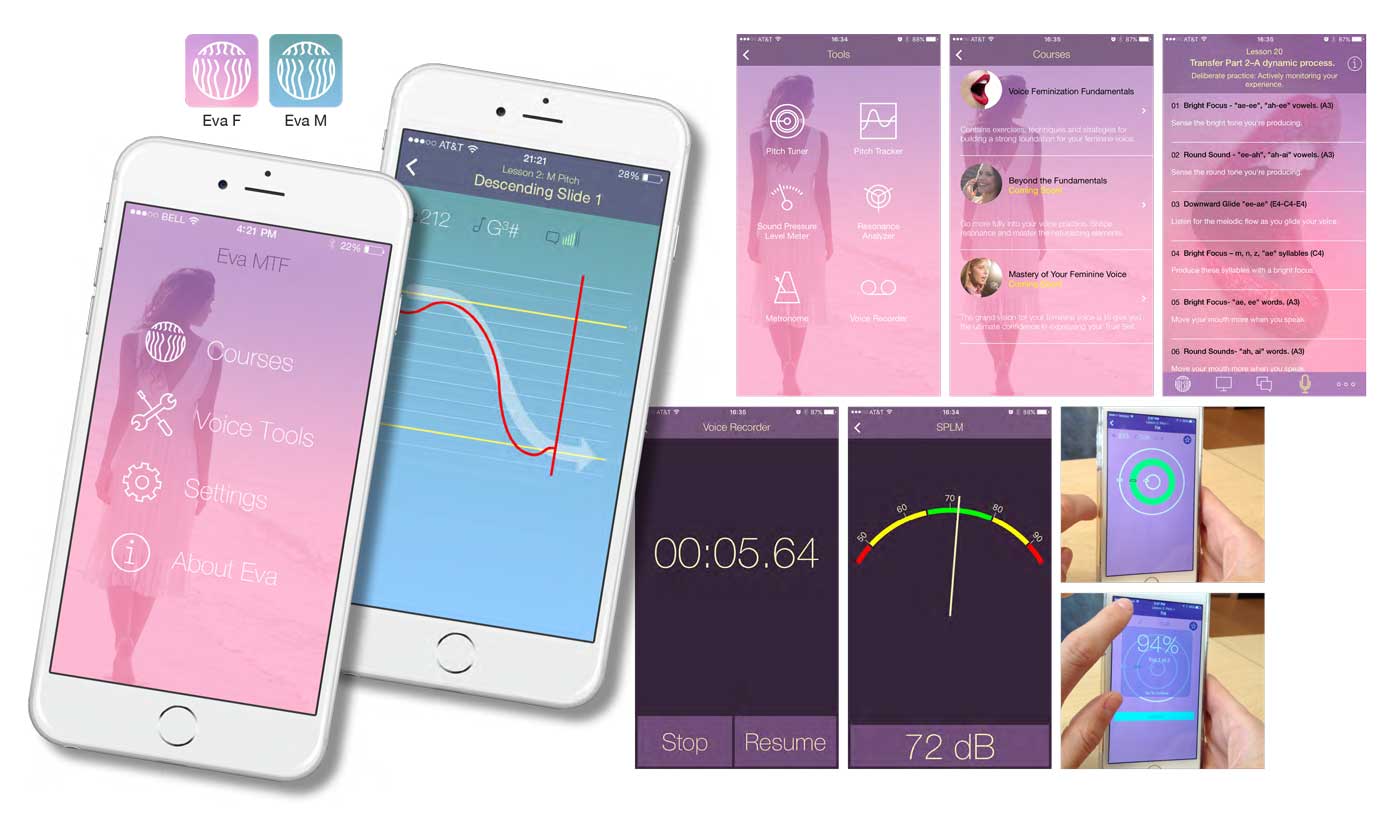
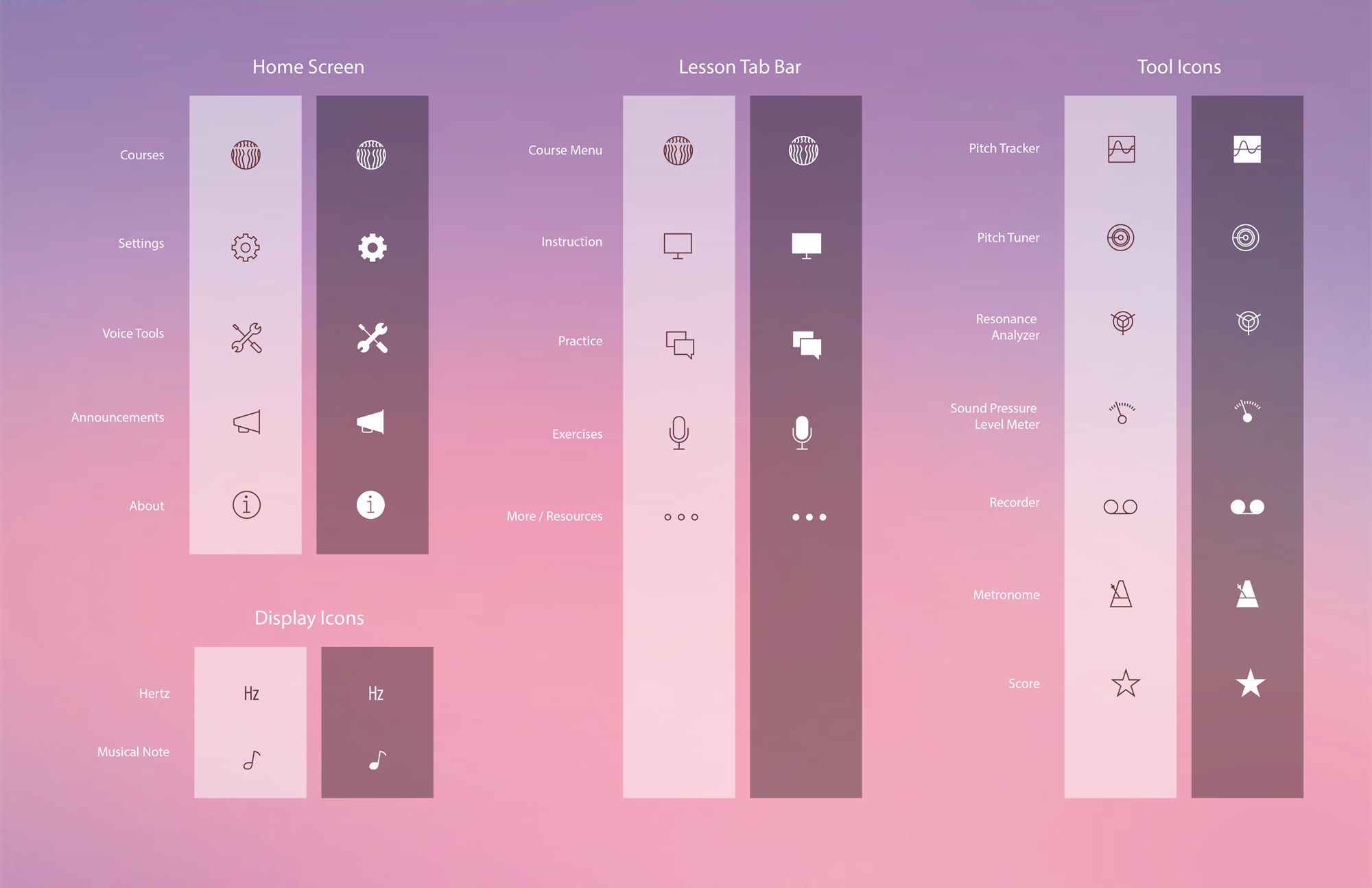
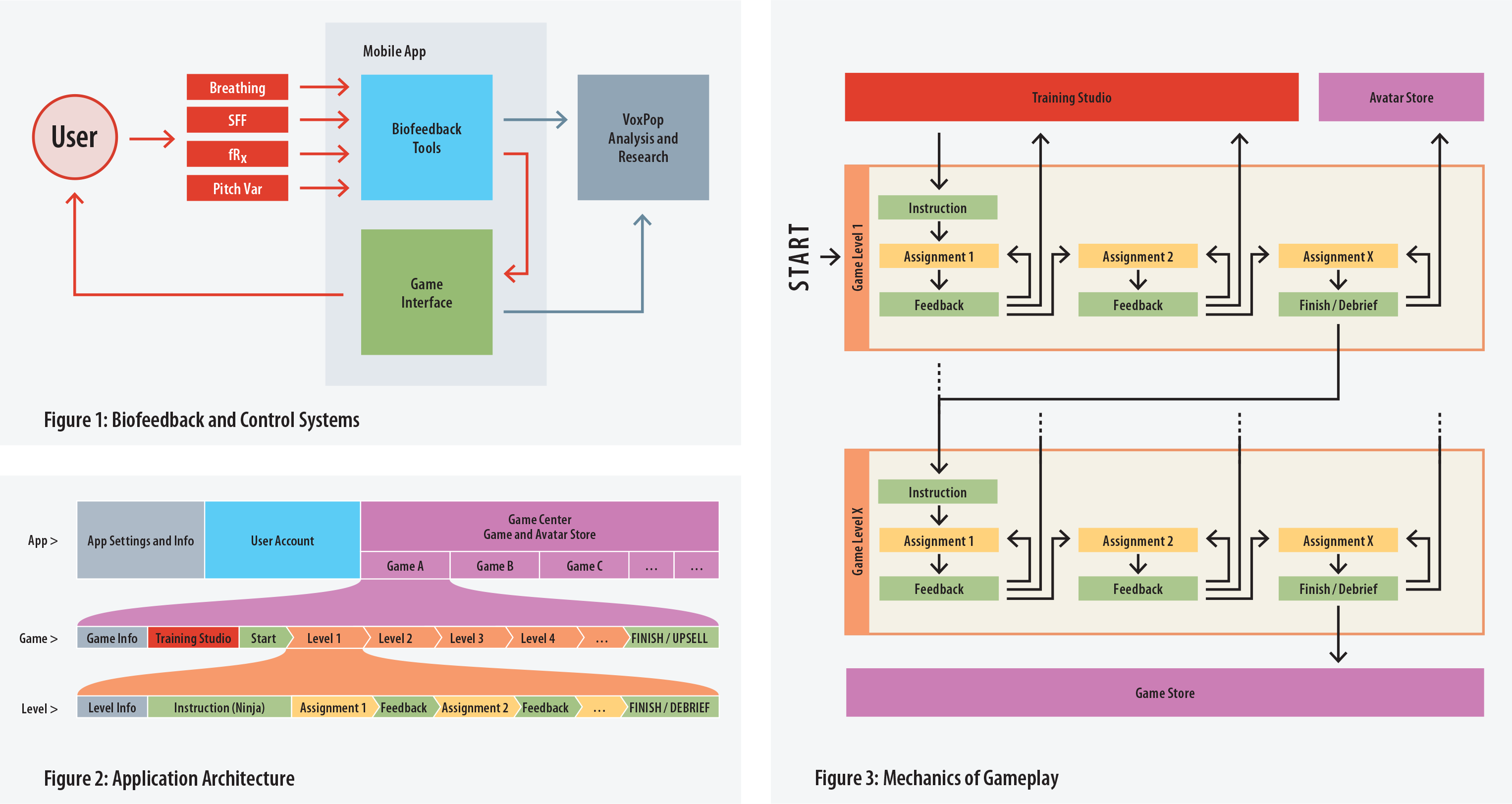
The platform I designed operated as a layered learning system. Each Program — EvaF for voice feminization, EvaM for masculinization — contained Courses of ten to twenty Lessons, each structured around three instructional videos and real-time scored exercises providing immediate visual feedback on voice parameters including pitch, breath, and resonance. A companion web-based subscription platform, evaf.app, extended the offering with additional content, a community layer, and live interactive webinars. At their peak, the apps reached 17,000 active users in more than 34 countries, averaging approximately 40 downloads per day, with coverage in the Smithsonian, The Guardian, VICE, National Public Radio, and BuzzFeed, among others. Through mid-2022, I produced and edited all video content for both the mobile apps and the web platform, then hired and trained a video contractor to take on that role.
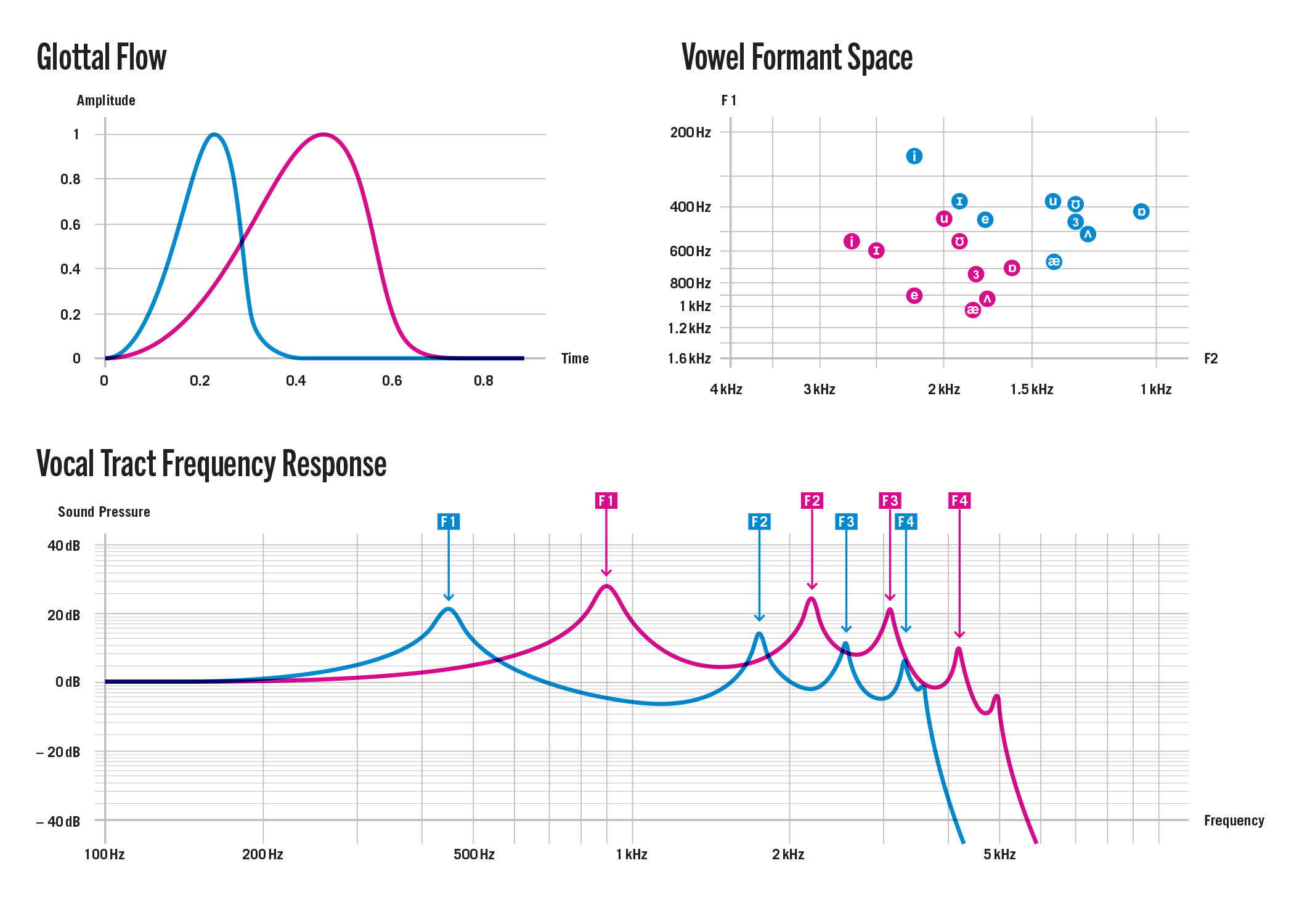
Resonance Analyzer
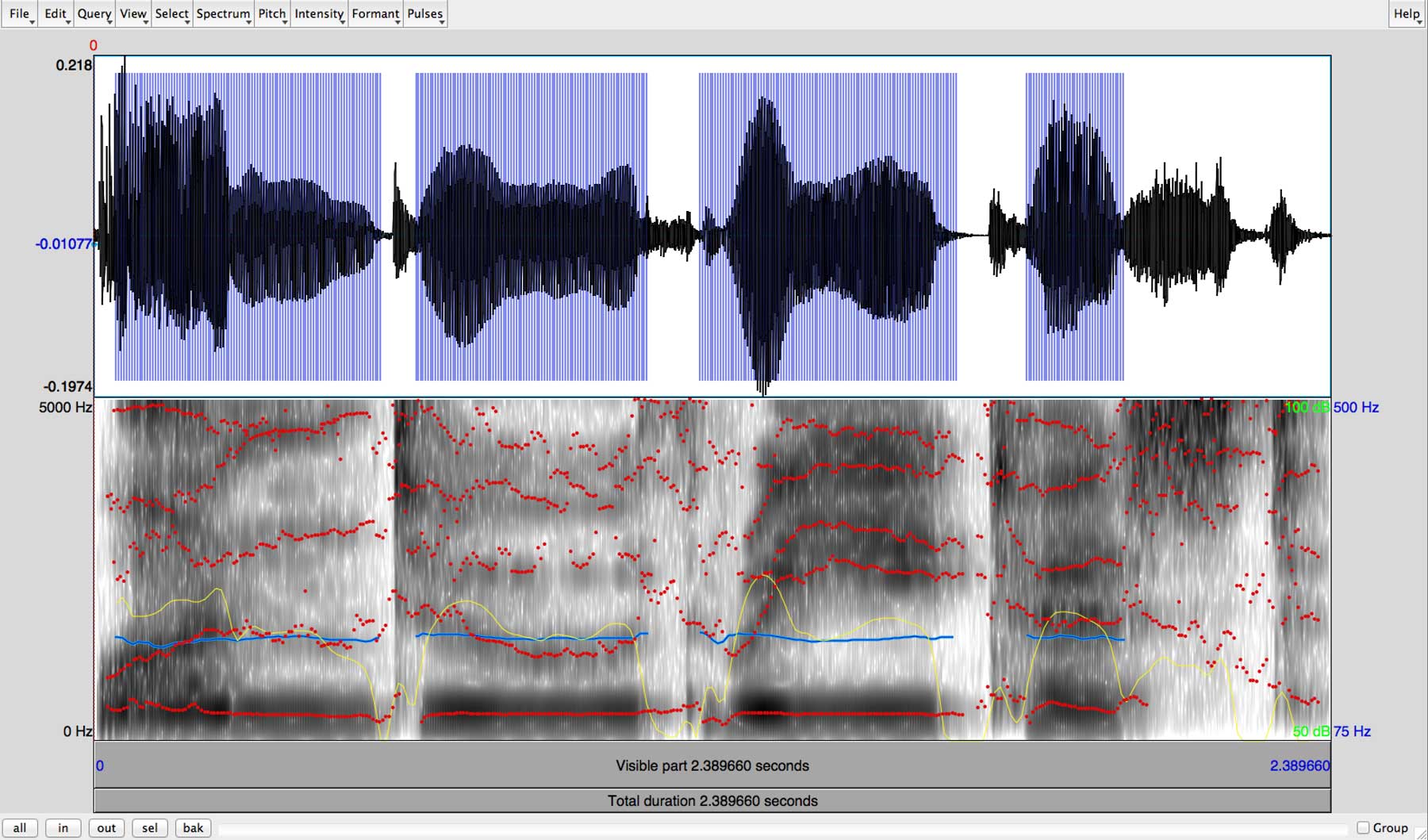
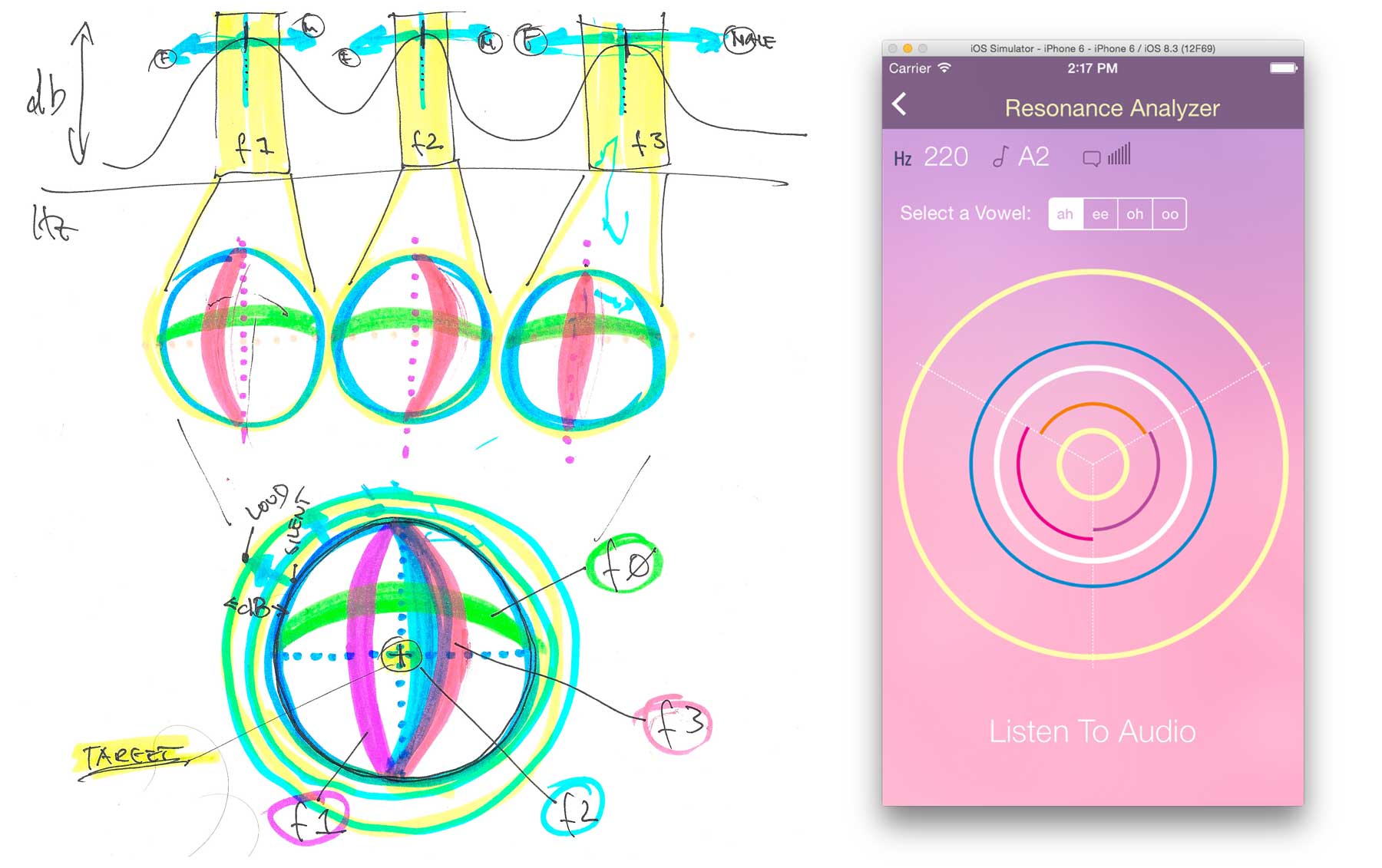
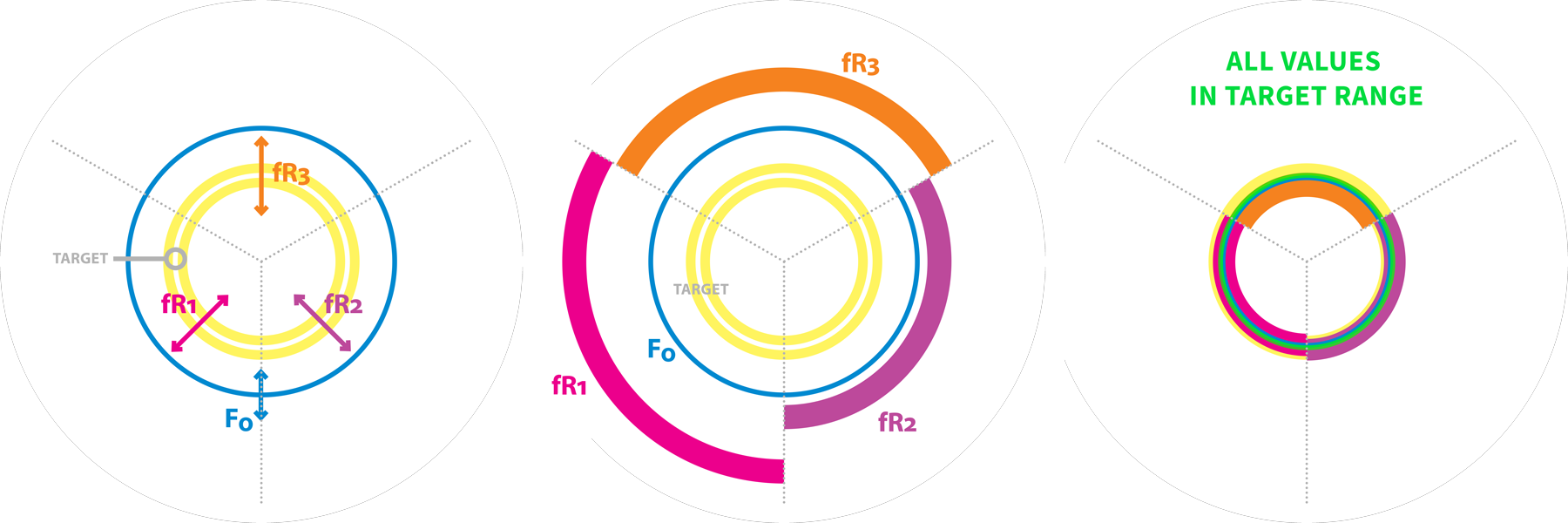
Beginning in 2020, I directed the development of two new features. The first was a refinement to the existing Pitch Tracker tool: I designed the UI for a “Pin High/Low Frequencies” function that allowed users to mark their personal pitch range endpoints and track progress over time — a functionally specific addition that gave users a persistent visual record of their own trajectory. The second was a Resonance Analyzer prototype: a real-time formant frequency visualizer capable of indicating whether a voice reads as masculine or feminine, grounded in peer-reviewed voice science data and developed in collaboration with voice scientist Ron Scherer, PhD, Professor Emeritus at Bowling Green State University. I designed the user interface and real-time data visualization for both a standalone and an in-exercise version. The prototype was built but did not reach deployment before the company’s closure.
UGA Innovation Gateway I-Corps Accelerator Program
In Spring 2021, our company VoxPop was accepted into the UGA Innovation Gateway I-Corps Accelerator program. I served as Academic Lead alongside co-founder Kathe Perez as Entrepreneurial Lead. Over eight weeks of structured hypothesis testing, we conducted more than 100 interviews with transgender people and speech-language pathologists, refining three distinct user archetypes: people newly beginning transition, those mid-process, and those living post-transition who continued to experience voice dysphoria. The analysis confirmed that the serviceable addressable market (SAM) of $1.5 billion was too small to attract venture capital at the scale of investment the product required. I presented the VoxPop investor pitch on March 22, 2021, at the UGA Innovation Gateway before an audience of entrepreneurs and potential investors, which resulted in three ongoing business and research mentorships.
Small Business Innovation Research Grant
The central outcome of I-Corps coaching was a strategic reframe: from venture capital toward federal research funding, and from a commercial product toward a clinically validated, gamified biofeedback intervention for voice dysphoria. With support from UGA Innovation Gateway mentors, the team assembled a research group and began drafting a Small Business Innovation Research grant. I completed required CITI Program training in social/behavioral and clinical research practice, and the team submitted IRB applications to UGA (Phase I) and Sterling, a commercial IRB (Phase II). In summer 2021, we submitted a $2.25 million SBIR Fast-Track application to the NIH (PA-21-259) under the title “Eva the Voice Ninja: the voice trainer in the palm of your hand.” The NIH rejected the initial submission on a classification technicality, ruling that Phase II constituted a clinical trial. The team rewrote the proposal accordingly. A second submission was rejected in November 2022; revision based on reviewer feedback was underway in early 2023.
The third revision was never submitted. In early 2023, co-founder and co-PI Kathe Perez withdrew from the project following the Marshall Fire, a Colorado wildfire that had destroyed her home. The loss made continued collaboration untenable, and unresolved questions around intellectual property ownership made it legally impossible to proceed without her. When Perez withdrew, those unresolved questions made it impossible for me to continue alone. Several weeks later, we made the joint decision to dissolve VoxPop LLC. I spent the greater part of 2023 on the administrative work of closure: delisting Eva apps from online stores, shutting down the web-based learning platform evaf.app, closing SaaS, financial, and platform accounts across multiple services, and ensuring current users received appropriate notice and transition support. The company was dissolved at the end of 2023, ten years after its founding.
Trajectory
During the decade at the helm of VoxPop, I developed a methodology based on the agile development cycle, MVP-first thinking, and rapid prototyping practices that not only changed my design pedagogy but also became the working framework I carried into the ArchPal project. I also brought my expertise of interdisciplinary collaboration spanning design, voice science, software engineering, and clinical research; IRB protocol and human subjects training; and a decade of UX/UI development across multiple operating systems and platform generations.
But what accumulated most durably, tested against 17,000 users, was a conviction: that communities at the margins benefit most from technology that is well-designed, rigorously evidence-based, and available without financial gatekeeping. EVA provided that for voice, ArchPal extends it into writing. These two projects aren’t continuous, but they are consecutive.